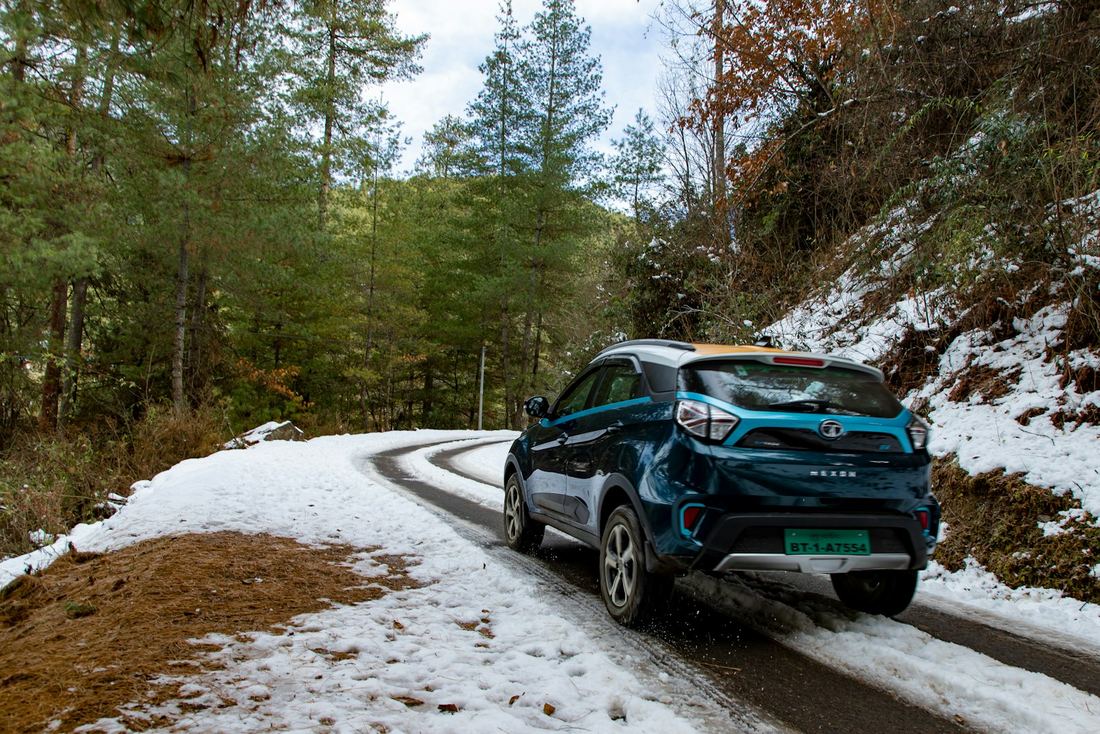
Charging on the road
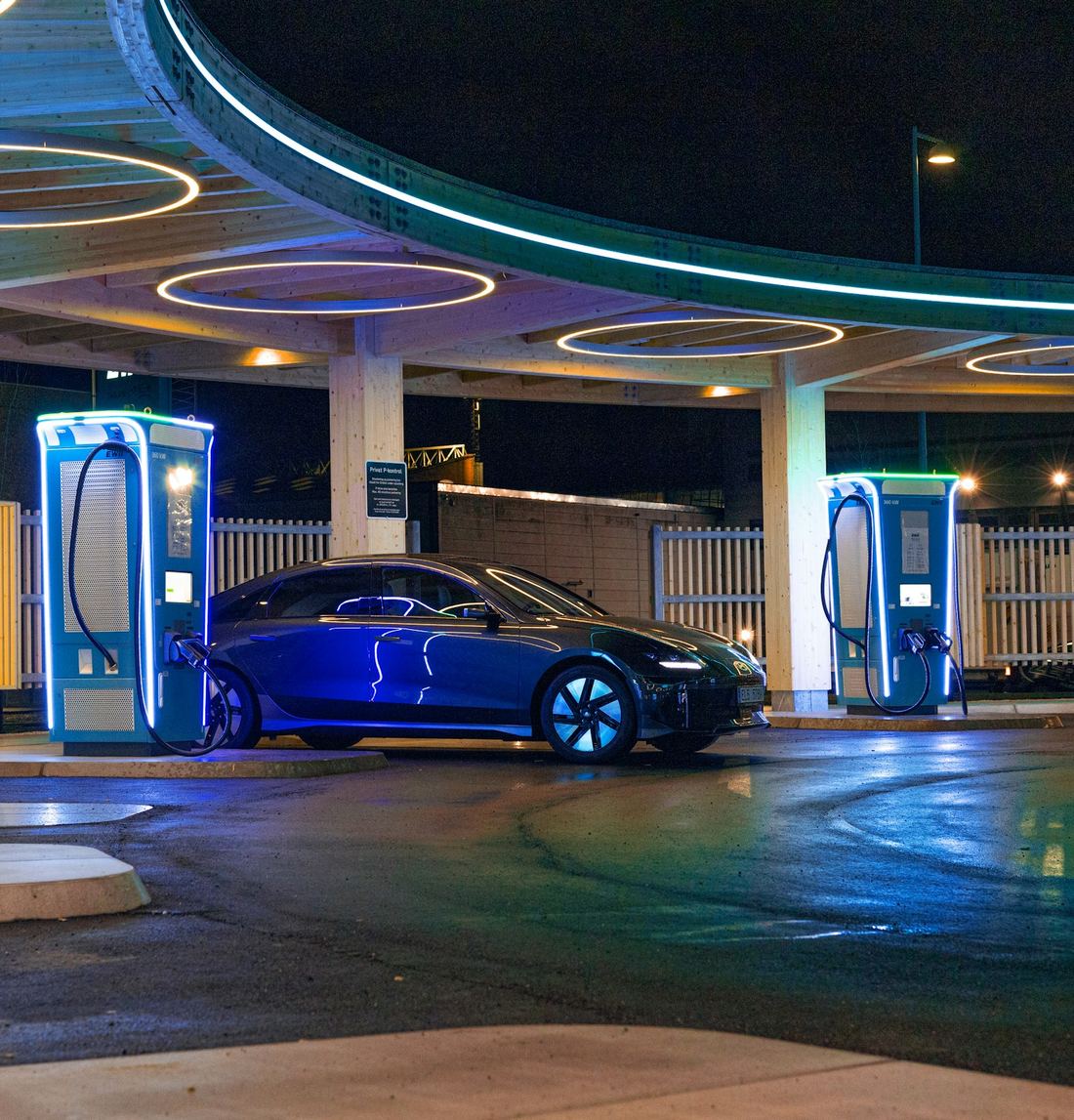
A road trip in an electric car takes more planning than a gas car does. Plan the stops before you leave and the drive tends to go quietly.
Public charging comes in two broad kinds. Slower public chargers sit in parking lots, garages and workplaces, and they suit a car that will be parked for a while. Public fast chargers sit near highways and are built for a stop on a trip. The manual says which plugs the car takes and the fastest kind of charging it can accept, and that sets the ceiling for every stop.
Fast charging is quickest when the battery is low and slows as it fills, so a long stop to top off to full often costs more time than it gives back. Many owners charge to the point where the pace drops, then drive on to the next station. The car's own trip planner, if it has one, can show where it expects you to stop.
A charging stop is quickest when you arrive low and leave once the pace starts to drop.
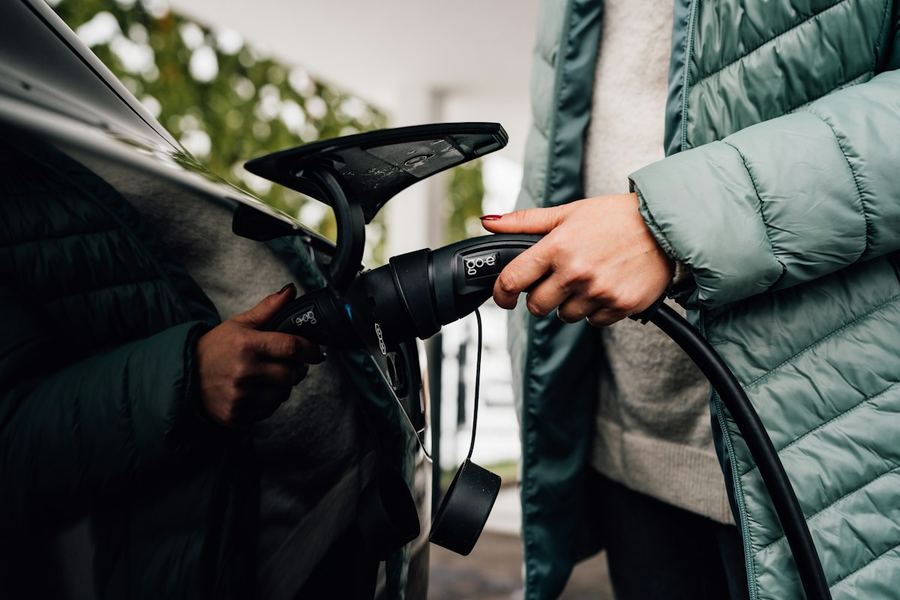
Before a long drive, look at the route and pick a charging stop plus a backup for each leg. Stations can be busy, out of order or slower than listed, and a backup takes the pressure off. Set off with a full charge from home if you can, since that covers the first stretch without a stop.
Payment varies between stations. Some take a card at the charger, some need an account set up ahead of time and some work through the car's own screen. Sort out how you will pay at your planned stops before the trip rather than in a parking lot with a low battery. Keep a note of each session's price if you track running costs.
Why charging slows as it fills
The battery takes charge fastest when it is low and slows down as it gets full, which spares the cells from heat and strain. A cold battery also takes charge more slowly until it warms up. Many cars can warm the battery on the way to a fast charger if you set the station as the destination in the car's trip planner.
- Arrive with a low battery for the quickest stop
- Set the charger as your destination to warm the battery
- Leave once the pace drops, unless the next leg needs more
- Watch the car's screen for the charging speed it reports
When a station is busy or down
A public charger can be occupied, out of service or slower than its sign suggests. Give yourself room by leaving each stop with enough range to reach the backup station, not only the planned one. If a charger will not start, try another stall before you give up on the site, and report the fault to the station operator using the contact details on the unit.
- Pick a backup station for every leg
- Leave each stop with enough range to reach it
- Try another stall before leaving a site
- Pack the portable cord and any adapters the car came with
Questions about charging on the road
Most owners charge until the pace slows noticeably, then move on, because the last part of a charge takes much longer. If the next leg is long or the next station is uncertain, staying longer can make sense. The manual may suggest how full to charge on a trip, and the car's screen shows the pace as you go.
Occasional fast charging on trips is what these cars are built for. Relying on it for every charge may wear the battery faster over the years, and some manuals say so. If you can do most of your charging at home or on slower public chargers, keep fast charging for the trips where you need it.
That depends on the car's charge port and the plugs at the stations you use. Some stations carry more than one plug type and some do not. Check the manual for the plugs your car accepts, then look at the stations on your usual routes. Buy an adapter only if the carmaker approves it for your car.
Keep reading
More on electric and hybrid
Updates on electric and hybrid driving
Pick electric and hybrid when you sign up. A text comes only after you tick the box; reply STOP to end them.
Sign up for updates